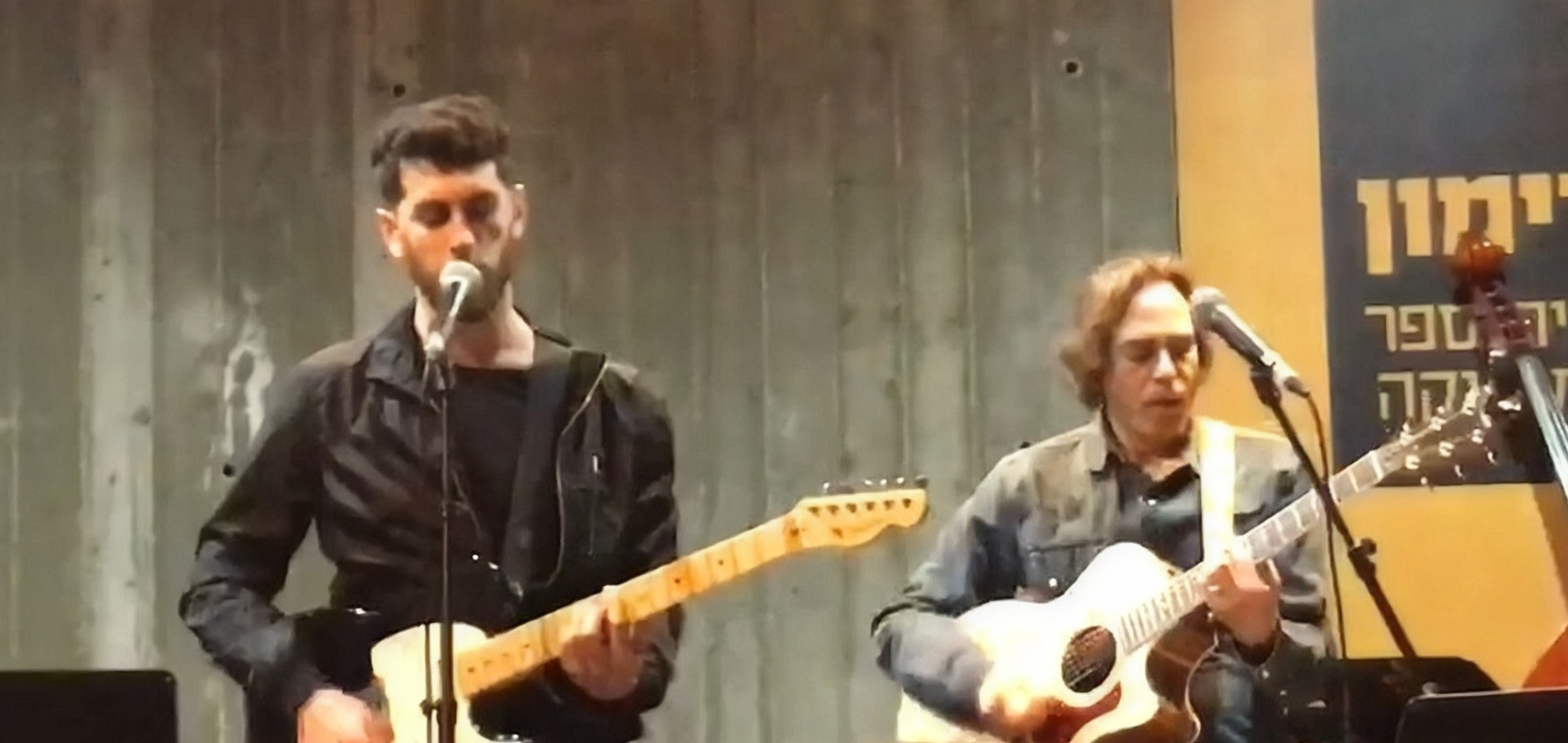
I started trying to write songs at sixteen. I had riffs, verses and plenty of ideas, but never a finished song. I always imagined having someone in the room to create with me. During a songwriting course at Rimon School of Music, my classmates offered feedback and helped me develop the lyrics. With their help and Hemi Rudner’s support, I finally completed my first song. That experience shaped the question behind hum: how could other musicians find that kind of creative support?
Performing my first completed song with Hemi Rudner at Rimon’s end-of-course show.
MARKET RESEARCH
A survey of independent musicians and songwriters explored the barriers to finishing music and collaborating with others.
89%
Reported having musical ideas they hadn’t turned into songs.
76%
Struggled to find collaborators who felt like a musical or personal fit.
73%
Hesitated to share unfinished ideas because of fear, uncertainty or lack of confidence.
THE LANDSCAPE
The benchmark compares Vampr, BandLab, Suno, Fiverr and hum across five criteria relevant to developing unfinished musical ideas.
Five platforms compared across five criteria for developing unfinished musical ideas
FEATURE
VAMPR
BANDLAB
SUNO
FIVERR
hum
Supports unfinished ideas
No
Yes
Yes
Yes
Yes
Ideas-first collaboration
No
No
Yes
No
Yes
Personal & musical alignment
Yes
No
No
No
Yes
Focused collaboration
No
No
Yes
Yes
Yes
Human-first (not AI-driven)
Yes
Yes
No
Yes
Yes
THE TAKEAWAY
Make it easy to start, clear where to contribute, and worthwhile to help. These three priorities guided the design decisions that follow.
DESIGN DECISIONS
Start with a sound
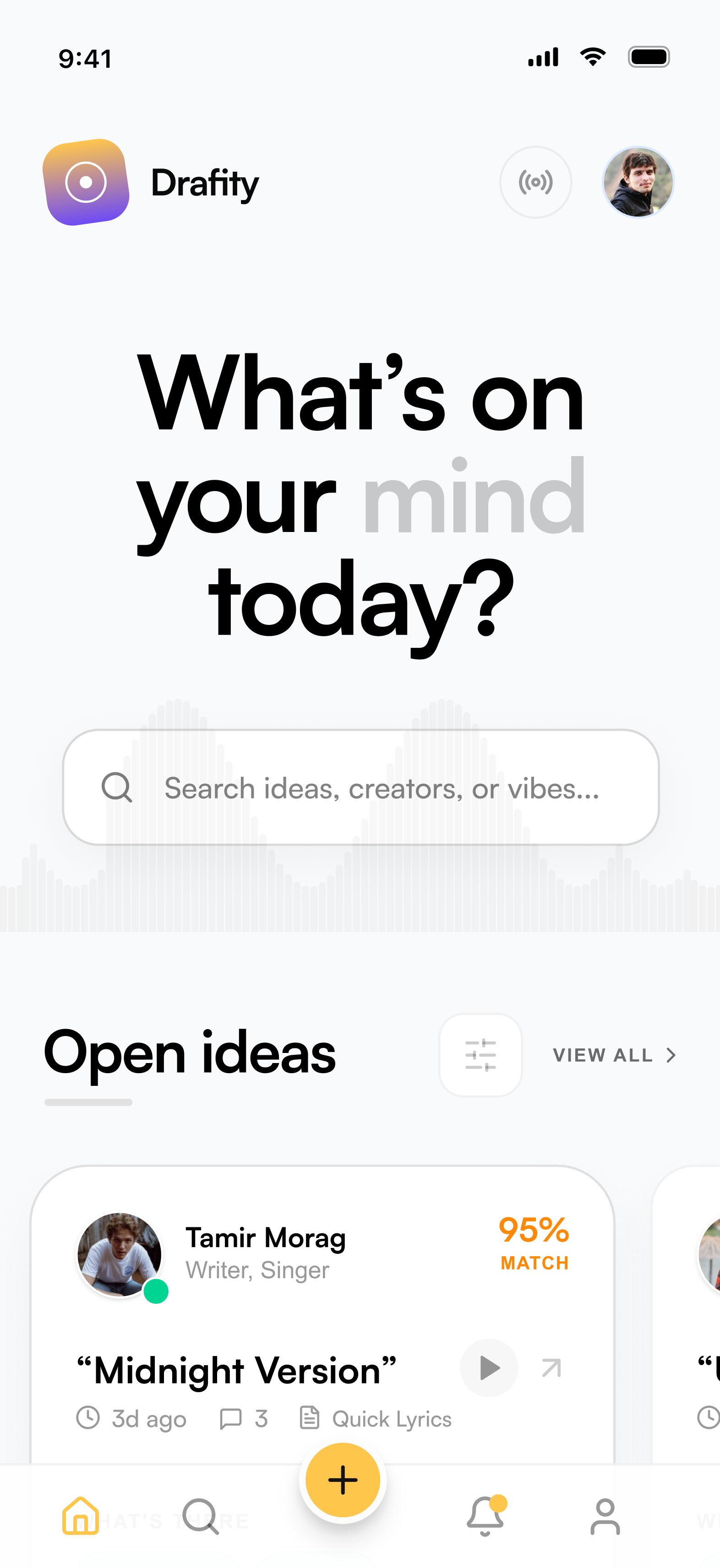
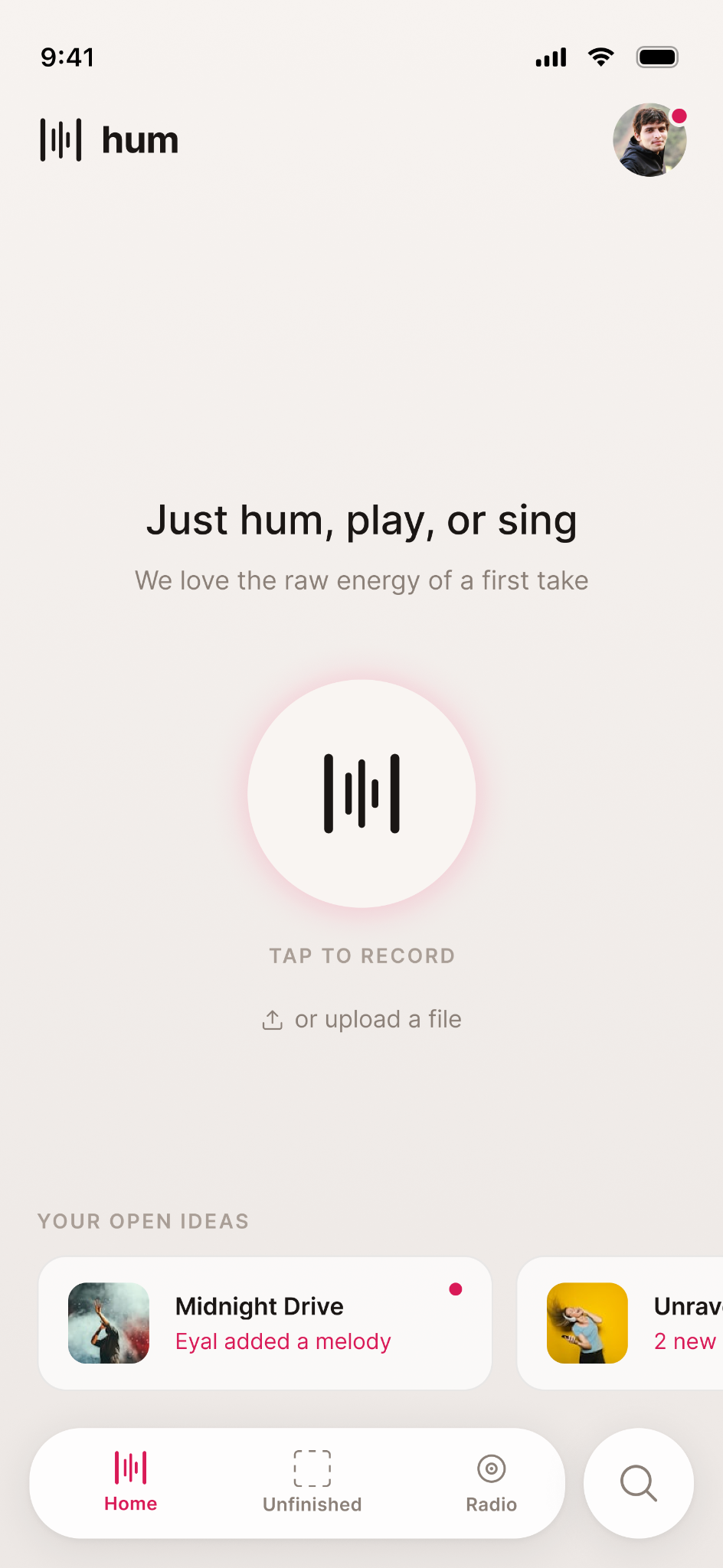
An early version, called Drafity, already supported recording, but Home led with search, creator cards and match percentages. Feedback during a job interview echoed my concern that it felt like a matchmaking network. I brought recording to the centre of Home so creators could start with a rough idea before looking for collaborators. ‘Just hum, play, or sing’ makes that invitation explicit.
→
Drafity · Earlier
hum · Current
Show what’s missing
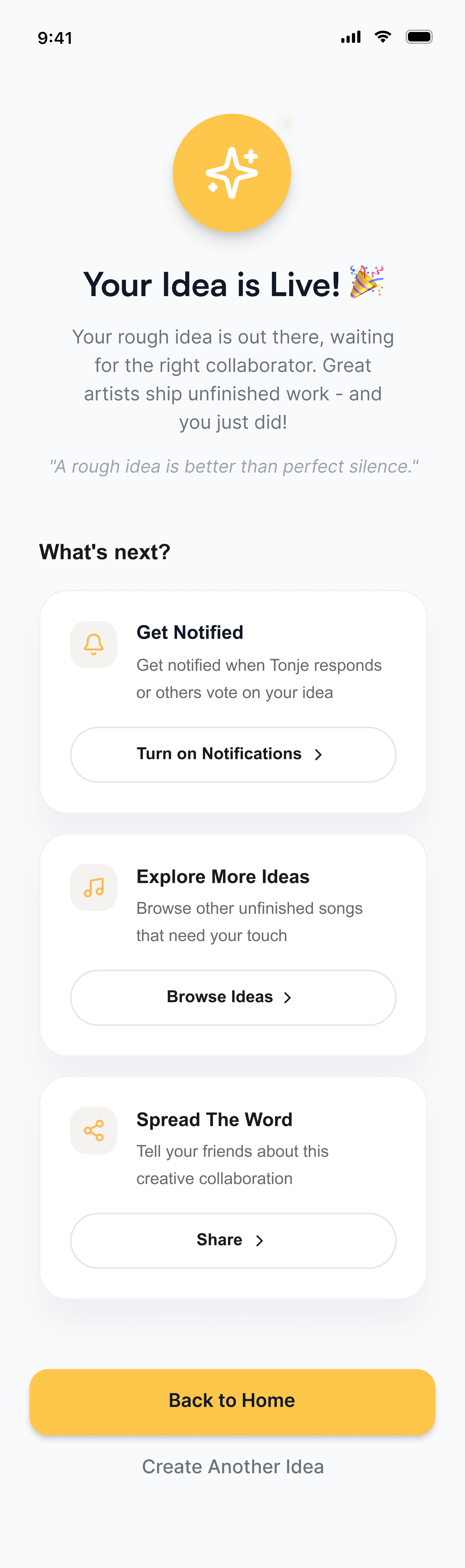
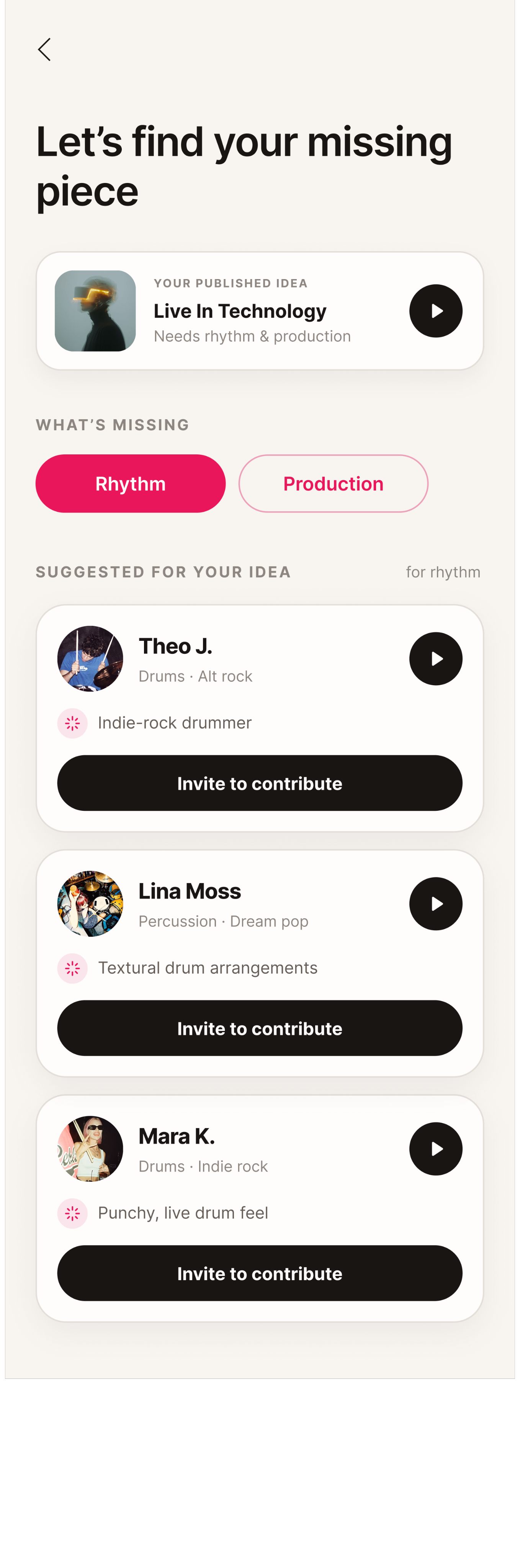
Publishing an idea raised another question: how would the right collaborators reach it? The earlier confirmation offered notifications, browsing and sharing. I added a direct next step based on what the idea needs: choose Rhythm or Production, listen to suggested musicians and invite someone to contribute. This gives the creator a concrete way to move the collaboration forward.
→
Drafity · Earlier
hum · Current
Make helping visible
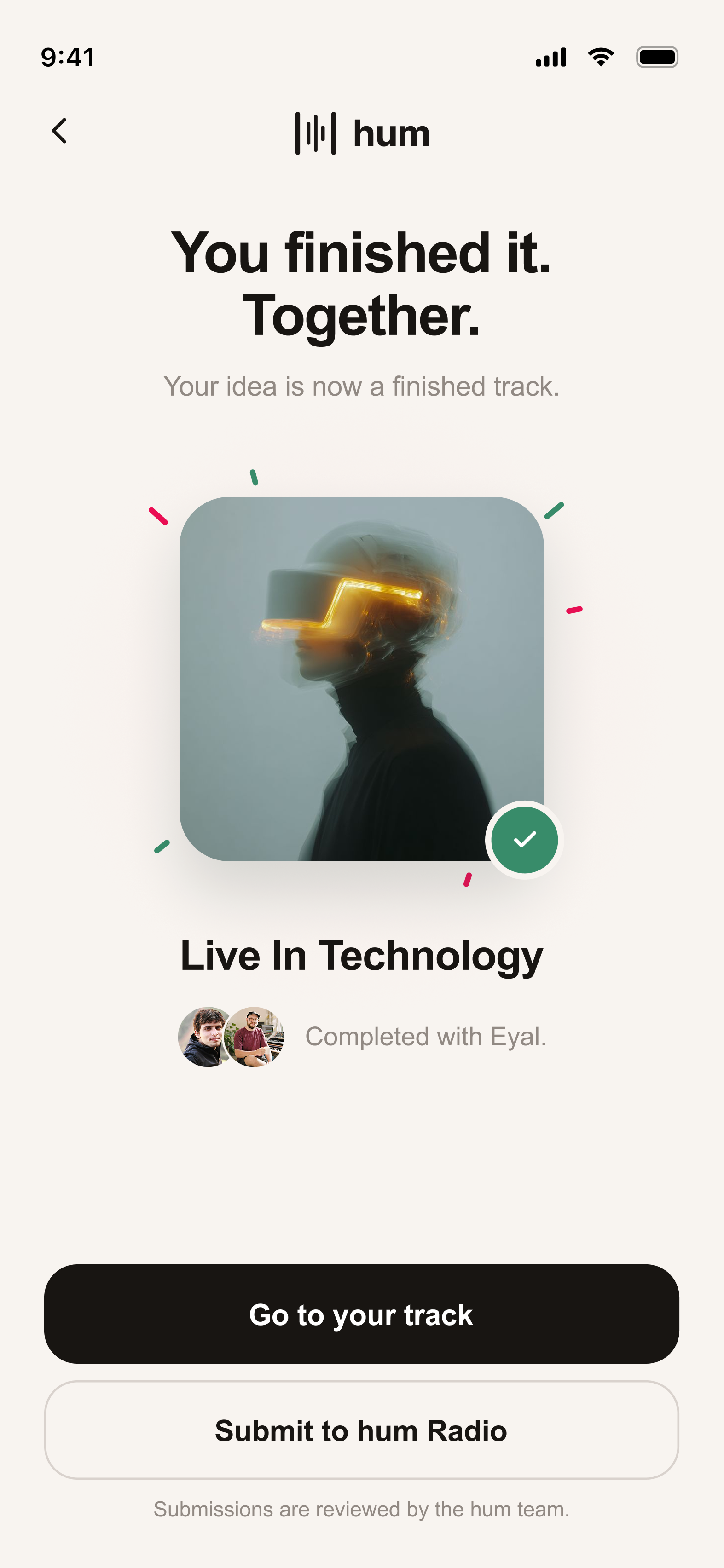
Helping someone else finish a song takes time and creative effort. Shared credits recognise that contribution, while submission to hum Radio gives selected collaborations a chance to be heard. The intention is to make contributing worthwhile through both recognition and potential exposure.
Submit for review→
Completion & shared credit
hum Radio · Selected tracks
WHAT’S NEXT
The next step is to test the experience with musicians using their own unfinished ideas.
Sharing an unfinished idea — Observe where creators hesitate between recording and publishing, and whether the language and feedback help them feel ready to share.
Finding someone to invite — Test whether missing roles, collaborator details and audio previews give creators enough information to choose whom to approach.
Contributing to someone else’s song — Explore whether shared credit and potential radio exposure motivate musicians to contribute, and what else they need before getting involved.